Alex Kopp and Karen Ekman left Innsbruck for a week of Dolomiti gravel. The forecast sent them the other way: northeast, by train, into the Bohemian Forest on the border between Germany and the Czech Republic.
Alex is German, Karen is Finnish. What follows is their ride across Central Europe, told through 5 words they picked up along the way.
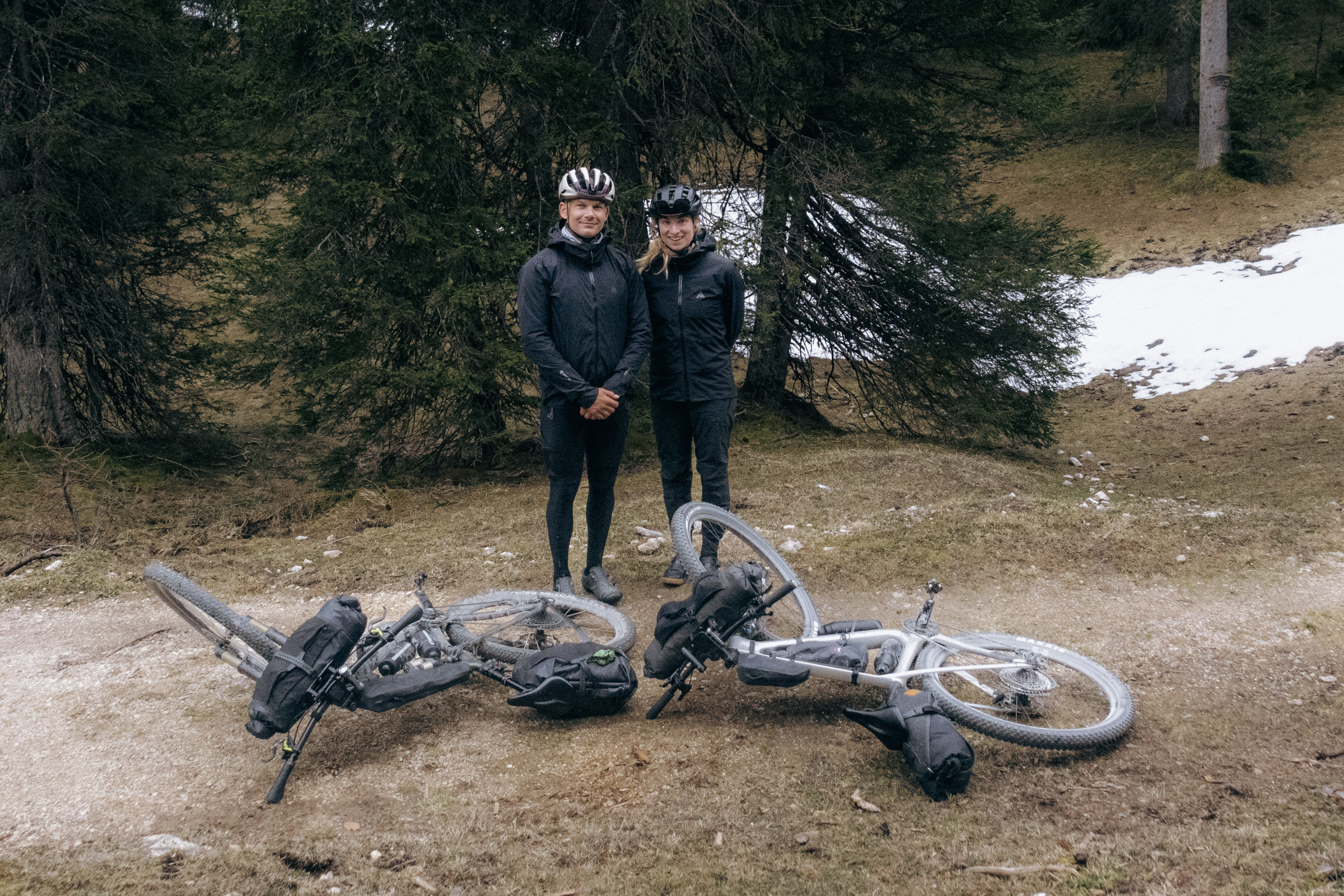
Alex: “Ey Faulpelz, wir sollten mal weiter, jetzt im Schnee sitzen, bringt uns auch nicht aus dem Wald raus."
(Hey lazybones, we should get moving—sitting in the snow isn’t going to get us out of the forest.)
Karen: “Men sluta vara så tysk och ta det lugnt, jag tar bara en chokoladpaus.. Den här oändliga skogen tråkar ut mig."
(Stop being so German and relax, I'm just taking a chocolate break... This endless forest is boring me.)
That is a fair sample of our usual conversation. We come from two different countries, speak different languages and often see things from different angles, but somehow the mood still worked. Half joking, half serious and fully aware that plans had already gone out the window.
What began as a spring ride towards the Dolomites turned into something else: a ride shaped by weather, instinct and curiosity. This is a story about letting go, shifting course and finding something unexpected along the way.
Schwoafing Tuláks (drifting wanderers)
We had gotten together in Innsbruck to gear up and head out for a week of bikepacking to start the season. Our oblivious vision of sun, pizza, espressos and Dolomiti gravel was shattered by the forecast for the southern parts of the Alps. When every weather app and storm radar agreed on torrential rain and thunder for the southern districts, we started looking for any other possibility.
The main Alpine ridge acted as a meteorological divide: bad weather in the south often means sun in the north, and vice versa. This time different weather was pushing in from every southern direction, west to east. Eventually all options pointed one way: northeast, into the only mountainous area unaffected by the storms—the Bohemian Forest on the border between Germany and the Czech Republic.
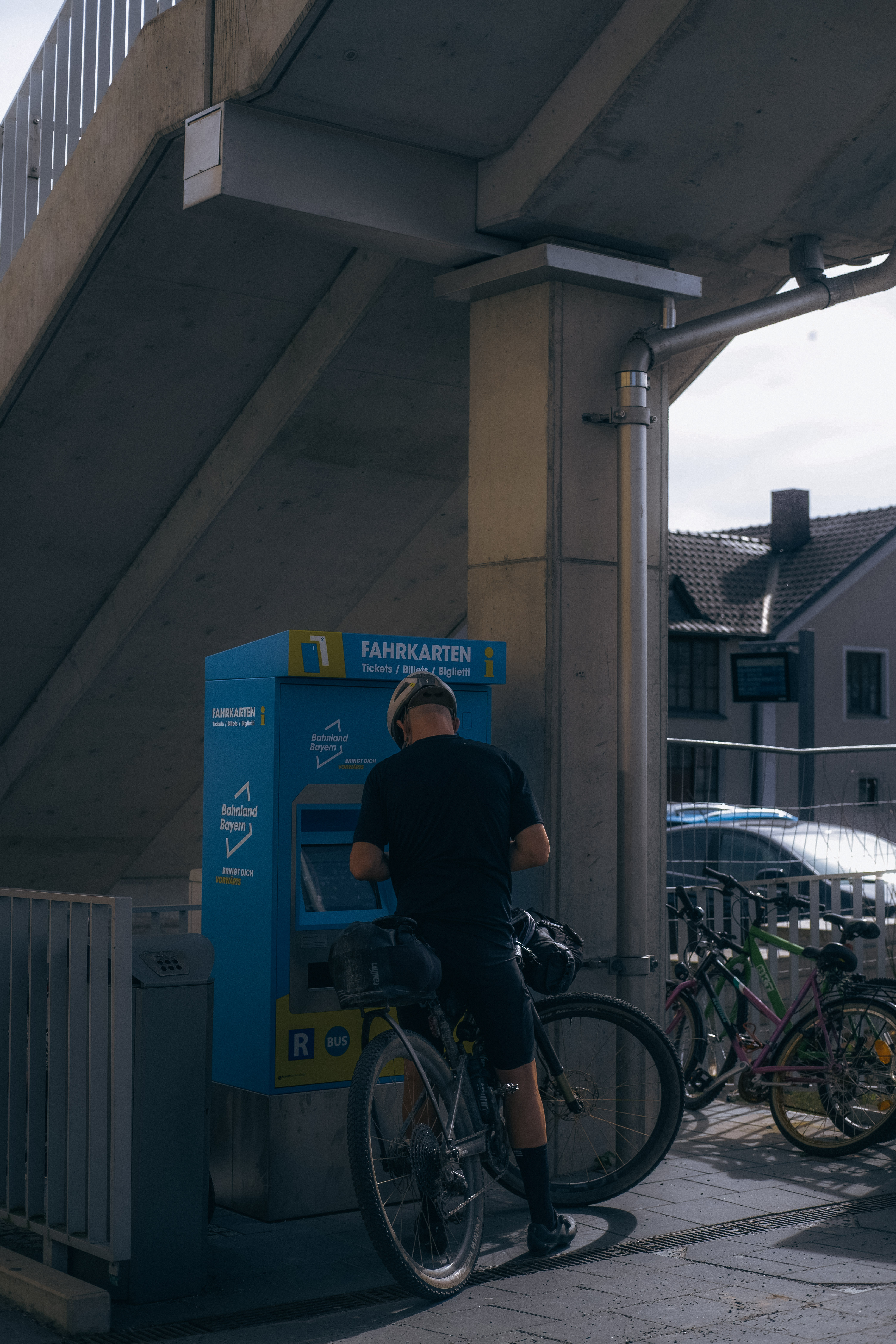
Taking the train, bikes in tow, was our saving grace. There are many advantages to living in the heart of the Alps, one being the surprisingly dense (if not always punctual) rail network stretching over the whole country. So we booked tickets for the next day’s early morning train and escaped east, using the few slow hours to scout the map for routes and areas to visit.
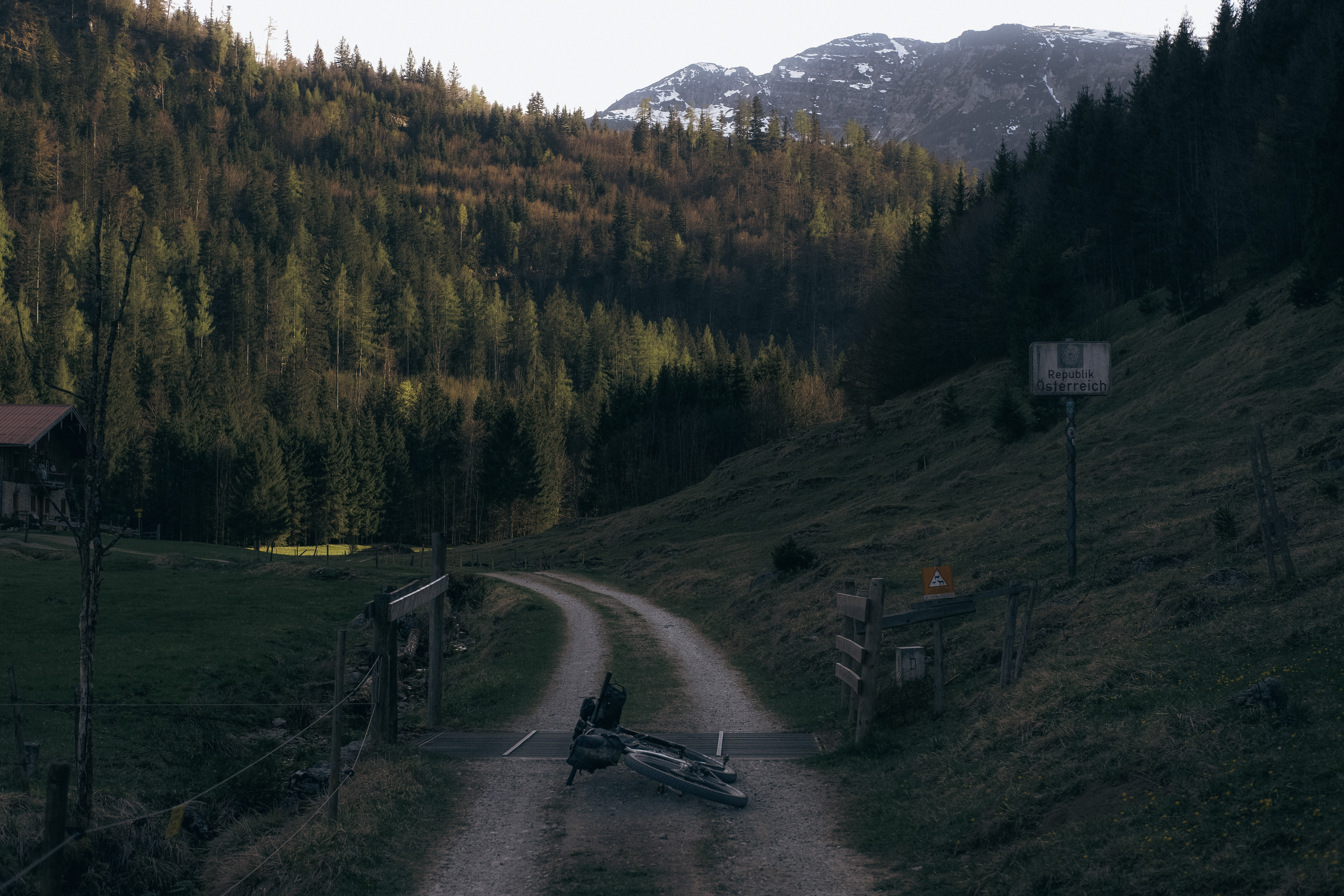
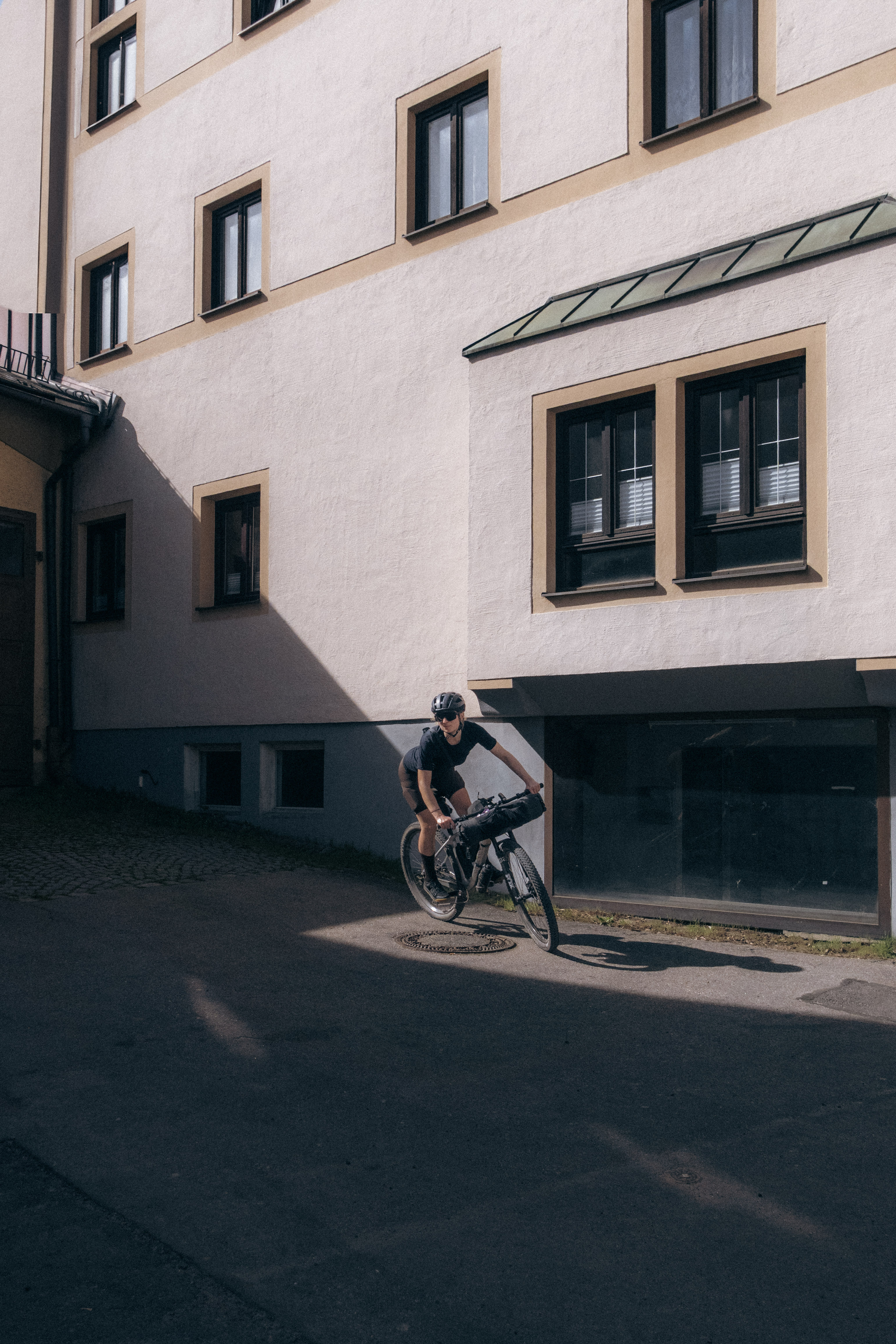
It was cloudy, around midday. The train station we got off at was quiet, the town very small. But it was the last Austrian town before a route that would crisscross the Czech Republic and the German border. And so we filled our water bottles and started pedalling.
The small disappointment of missing out on the high Alpine was replaced by the excitement of not knowing. We were rolling into areas unknown to both of us, like two Schwoafing Tuláks, a combination of a Bavarian and a Czech word. Guided by the weather forecast and curiosity, fuelled by the possibilities that come with exploring Central Europe.
Šumava (humming sound of trees in wind)
Hummhmmhumm, the wind hums the treetops. A slight rattle in the raincover of our tent wakes us on the third morning of the trip. Like spring, we slowly awoke out of a half sleep—stretching stiff limbs and turning towards the first rays of sun.
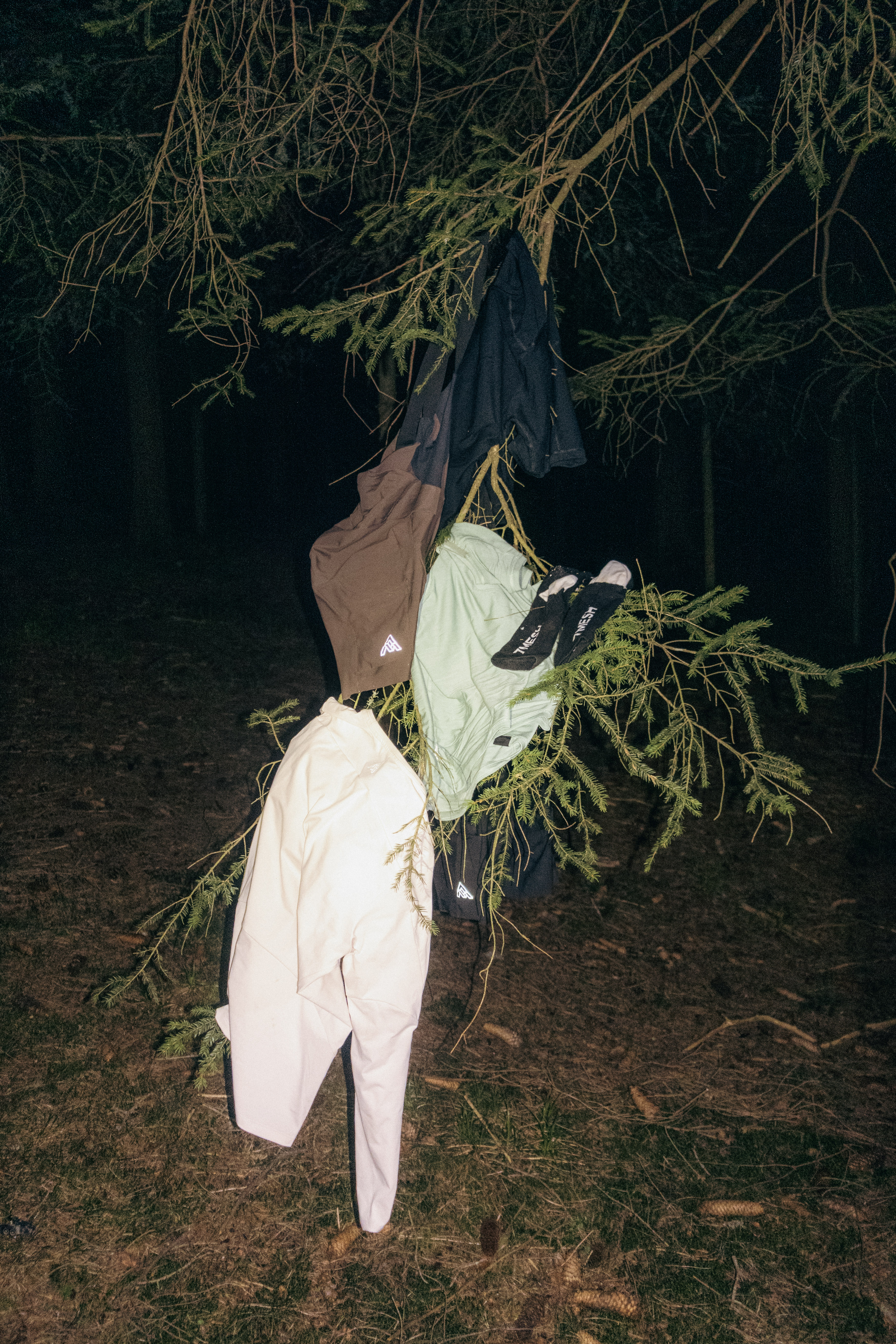
The night before we had pushed our bikes up the last stretch in the dark, feet slipping in the loose gravel lit up by our head torches. After finding a spot flat enough to pitch a tent and hanging the bibs to dry on the tree branches, we tucked into the sleeping bags, reminiscing on the day.
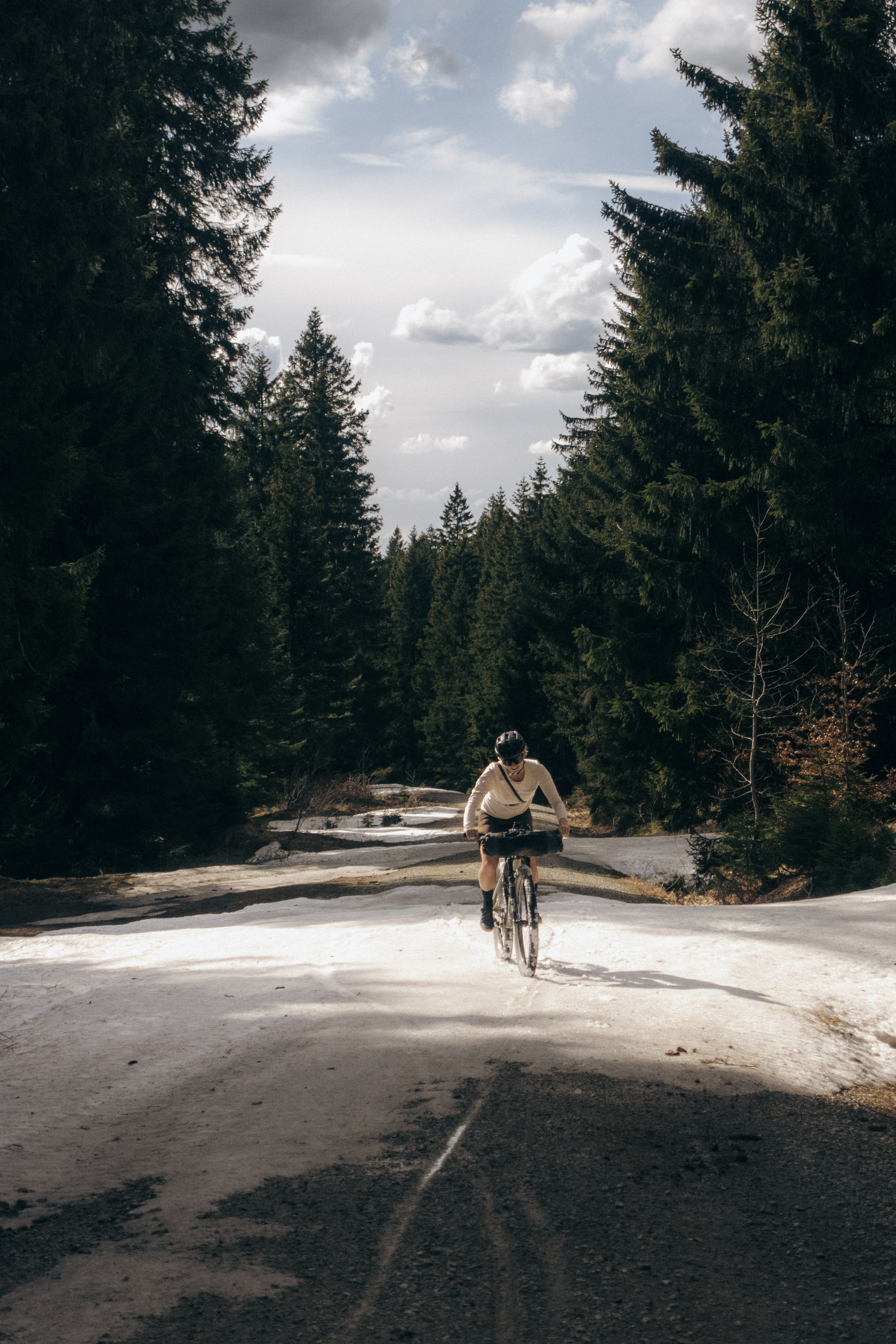
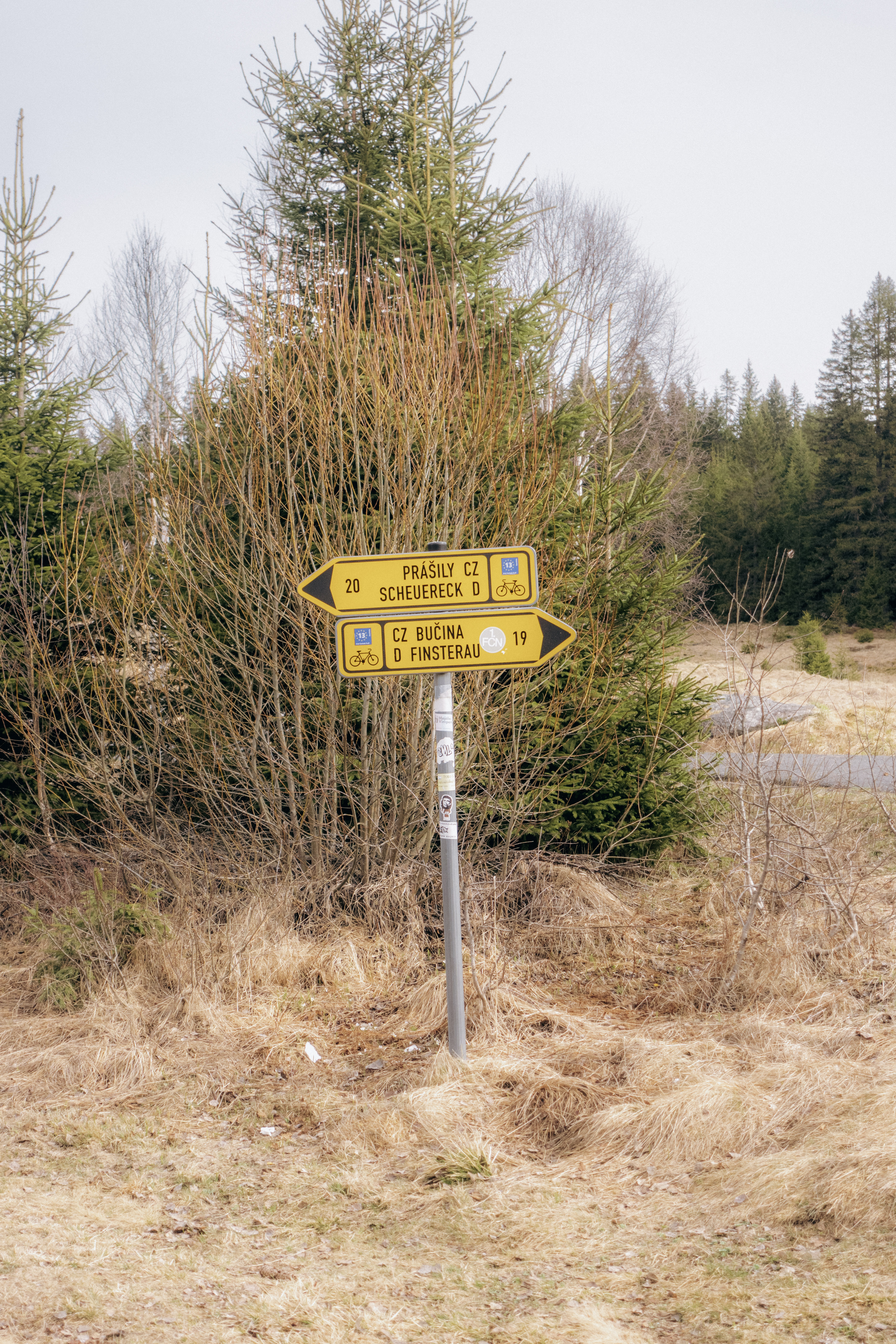
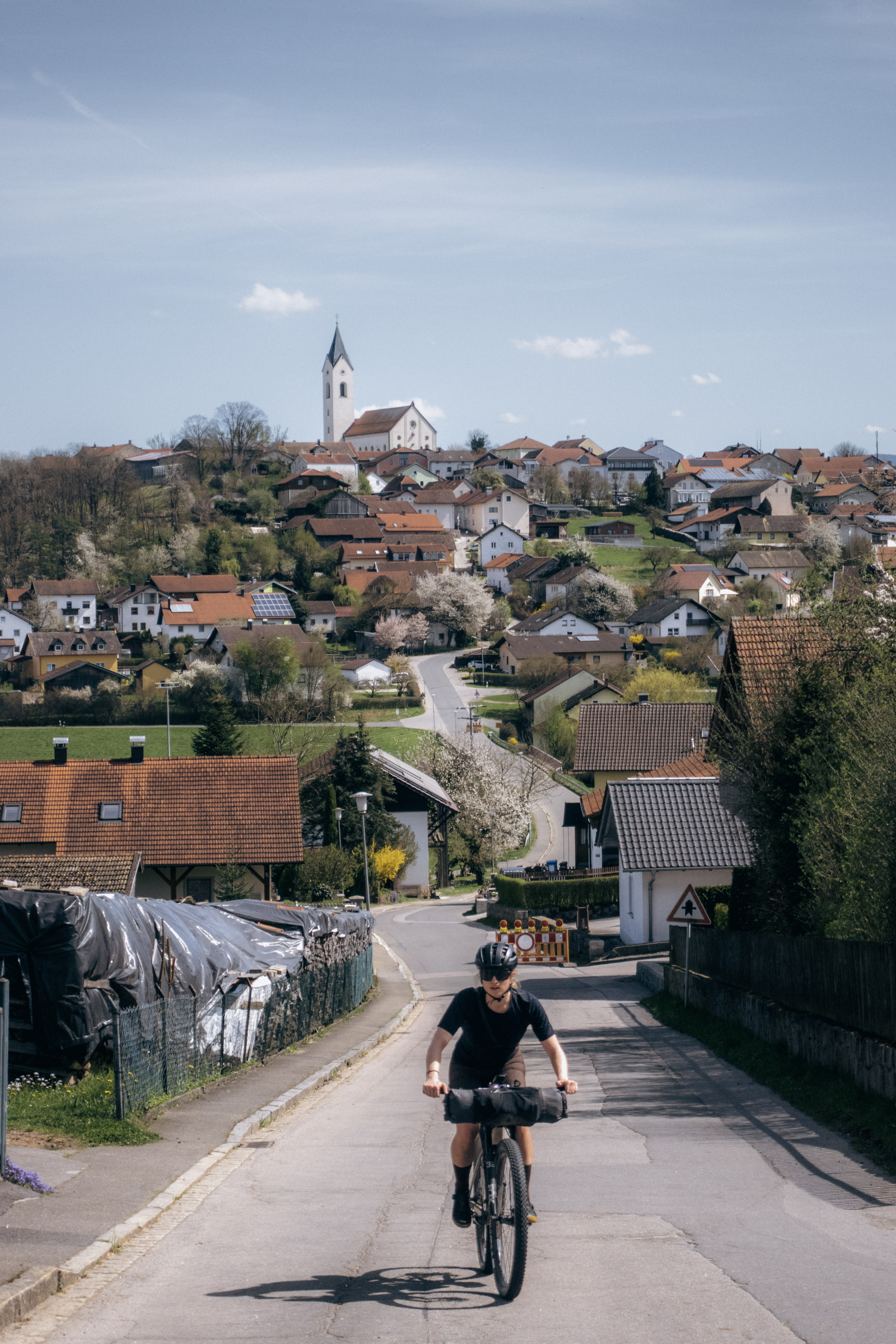
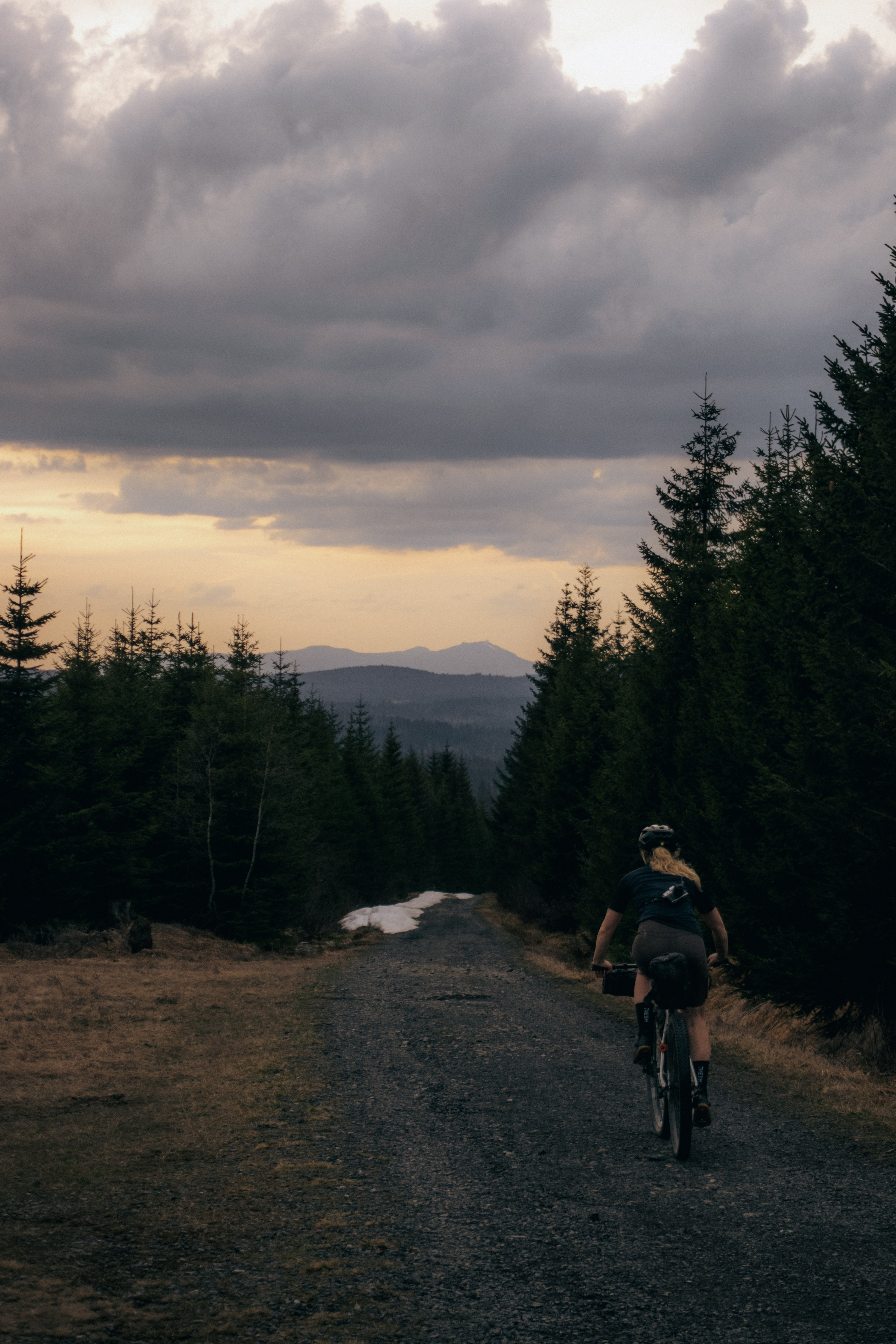
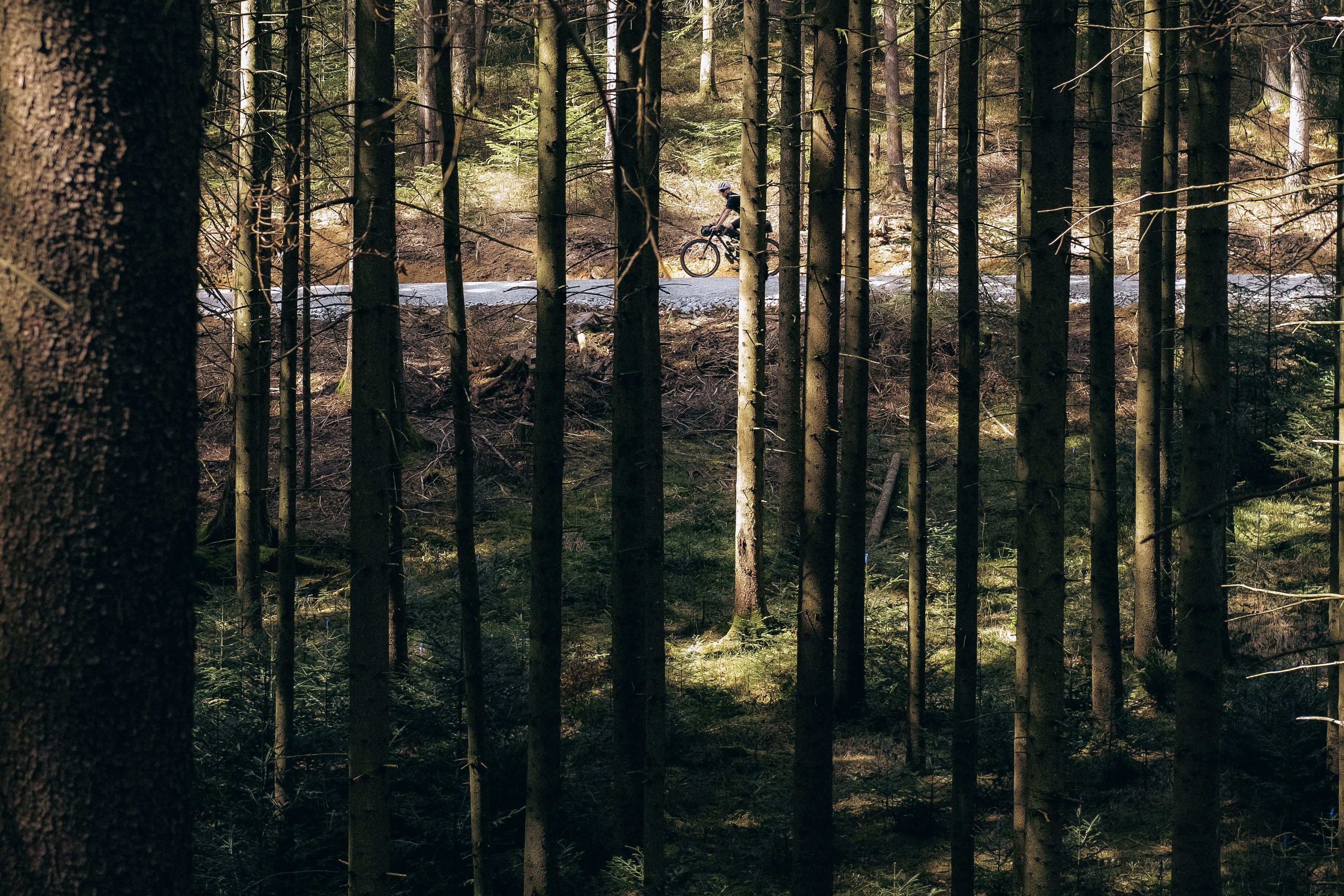
Day 3 was not much different to days 2 and 1. Meandering along the country border, taking in the variety of greenery, terrain and views through the occasional clearing in the dense forest. We spent most of the time below the treeline, isolation eased only occasionally by a high hill with an open view of forest stretching towards the horizon.
That humming in the trees gave the national park its name. Šumava is an elongated low mountain range along the border between Germany’s Bavaria and Czech Bohemia. The Czechs named the area after the sound of the wind blowing through the forest. The Germans named it Böhmerwald, the Bohemian Forest.
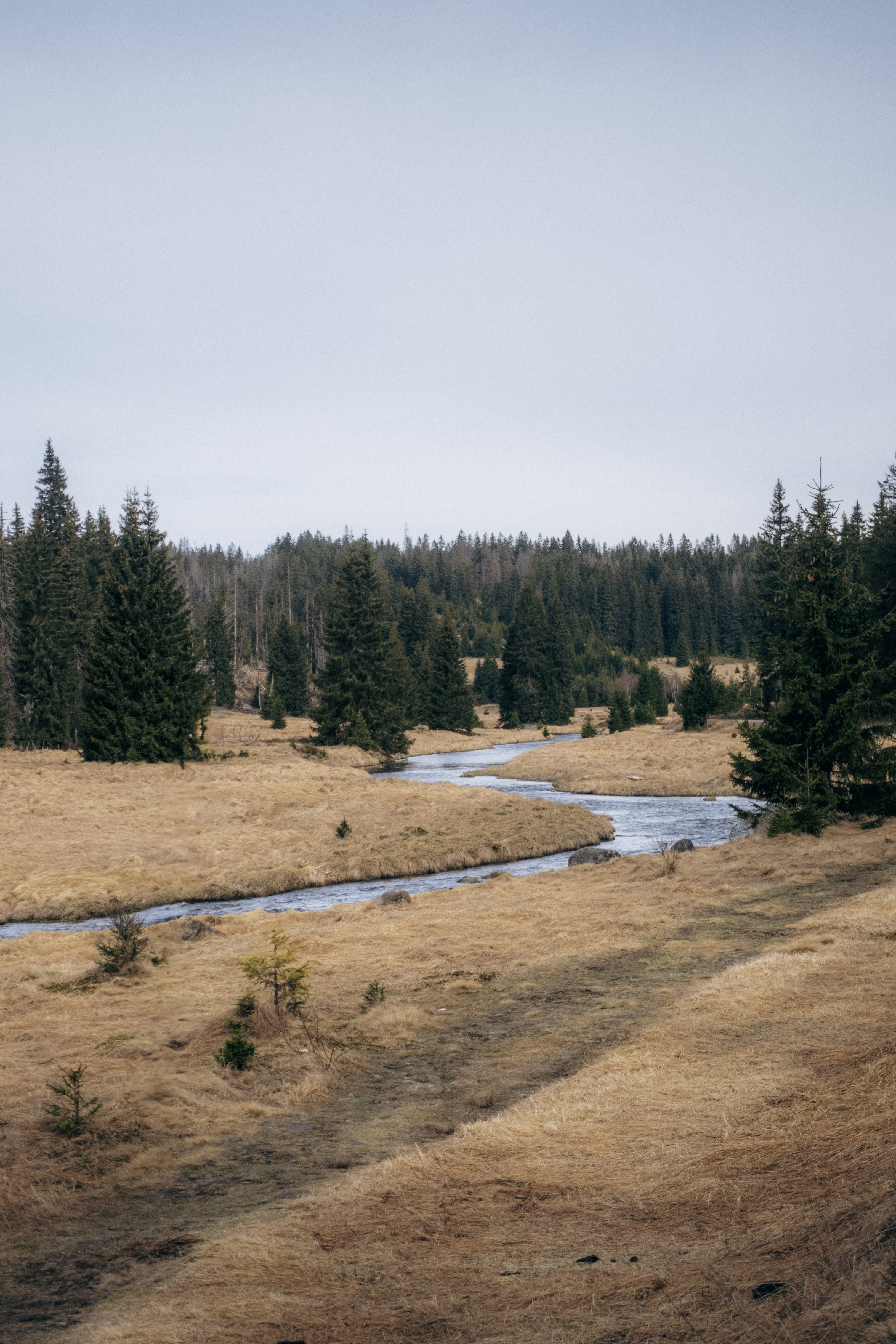
Gently rolling hills, vast forests, moorlands, remote lakes and sparsely populated high plateaus stretch over hundreds of kilometres. Between places like Bayerisch Eisenstein, Železná Ruda, Modrava and Kvilda, a quiet, almost otherworldly landscape unfolds. Once a political border zone and restricted area, the region today is a peaceful retreat, with barely trafficked roads, small villages and a rugged, often surprisingly wild atmosphere. Exactly what we were looking for.
Bikepackers have already discovered this region through events like the Bohemian Border Bash, a demanding race of rough gravel paths, remote forest tracks and significant elevation change. The race follows winding routes that trace the old borderlands, asking riders to navigate both the terrain and the region’s rich, sometimes hidden history.
Wegerl (small path, said fondly)
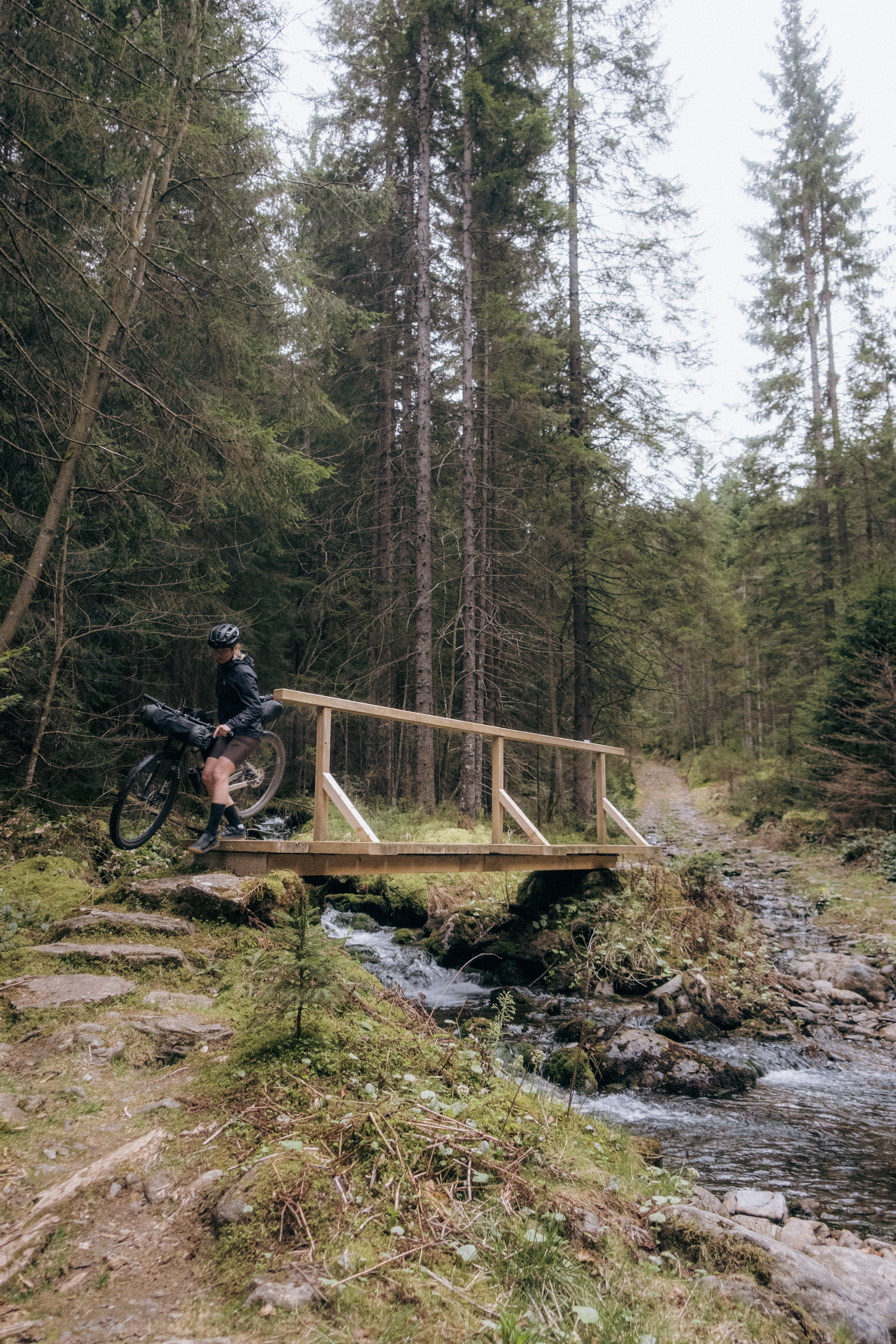
After leaving the highest points of the Bohemian Range behind us, our focus shifted. Equipped with suspension bikes, we felt a real pull to get off the long, wide agricultural gravel roads and onto the wegerl, the Bavarian word for small paths.
We found the Transbayernwald route, a bikepacking trail that weaves through the heart of the Bavarian Forest on rugged forest singletrack and narrow mountain paths. Over 350 kilometres it connects remote villages, dense woodland and gently rolling hills, often crossing protected areas and UNESCO biosphere reserves. Riding it meant a landscape shaped by centuries of forestry and tradition, far from larger towns, where every Wegerl promised something new.
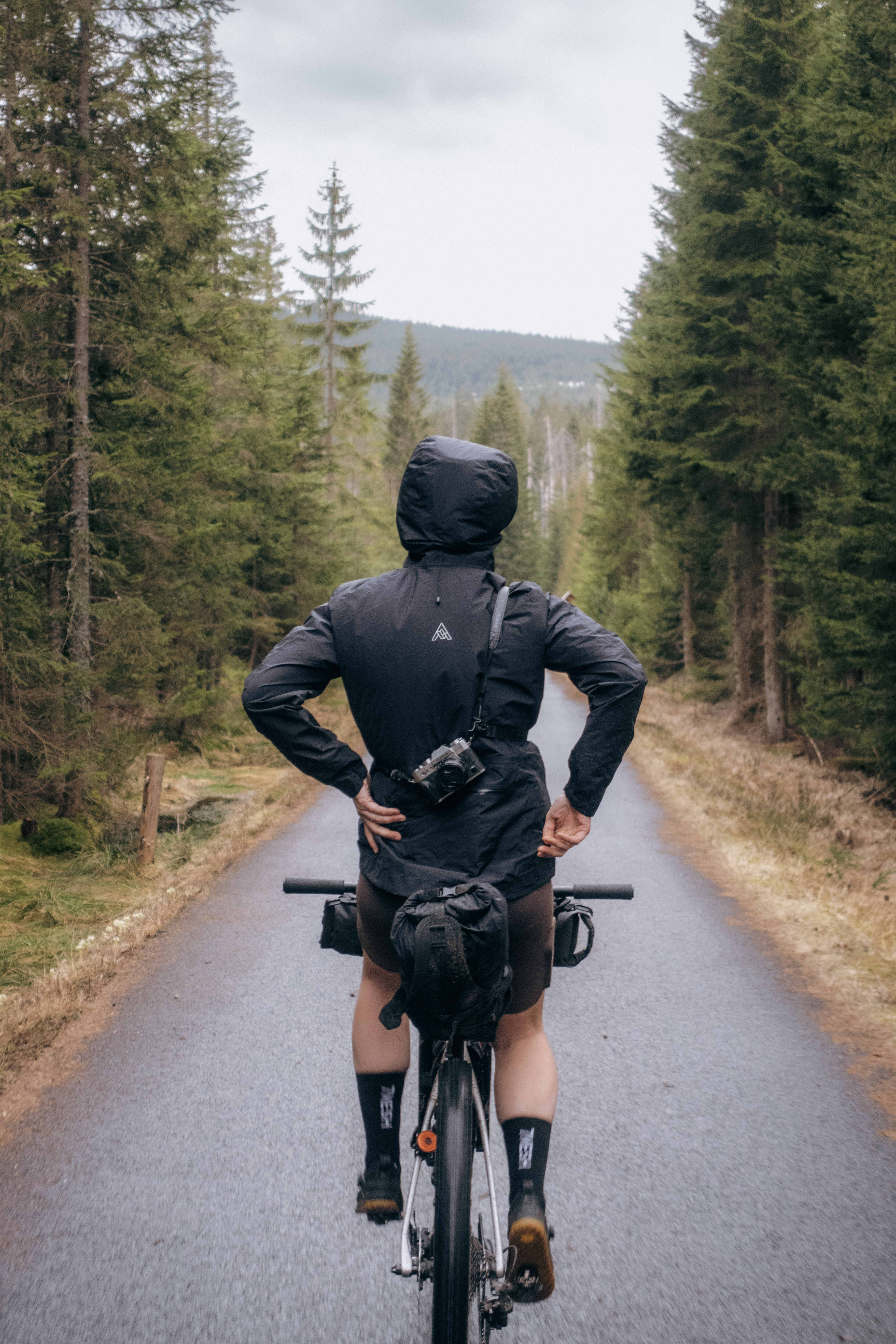
What followed felt like a game of hide and seek—only it was the singletracks doing the hiding, and we were the eager seekers. Hours slipped by beneath the sun as we chased the signs guiding us along the Transbayernwald route. With whoops of excitement we rolled off the main bike paths and plunged into shadowy forests, following arrows that led us down yet another almost invisible trail. No mind can stay fully adult when tires bite into grippy soil, carving through the flow of a hidden singletrack. Laughter echoed through the trees as we skidded and giggled our way to the trail’s end, bursting out of the forest and racing each other toward the next secret detour.
Weidafoan (keep rolling)
Reaching the end of the Bohemian Forest marked the beginning of Germany’s seemingly endless agricultural stretches. As transition trails started to outnumber flowy singletrack, we sat down over an ice cream to reassess, weather apps and trailmaps open between us. Neither of us had reached the wafer cone before the decision was made: we’d catch another train back south. The worst of the rain had passed and sun was forecast for the northern Alpine regions. It was time to weidafoan, to move on.
Darkness had settled over Salzburg by the time we arrived. The city bathed dimly in the orange hue of streetlights as we coasted down the paved multi-lane roads. Streets, bars and corner shops brimmed with life, and we felt “the real world” knocking on the door of our bikepacking bubble.
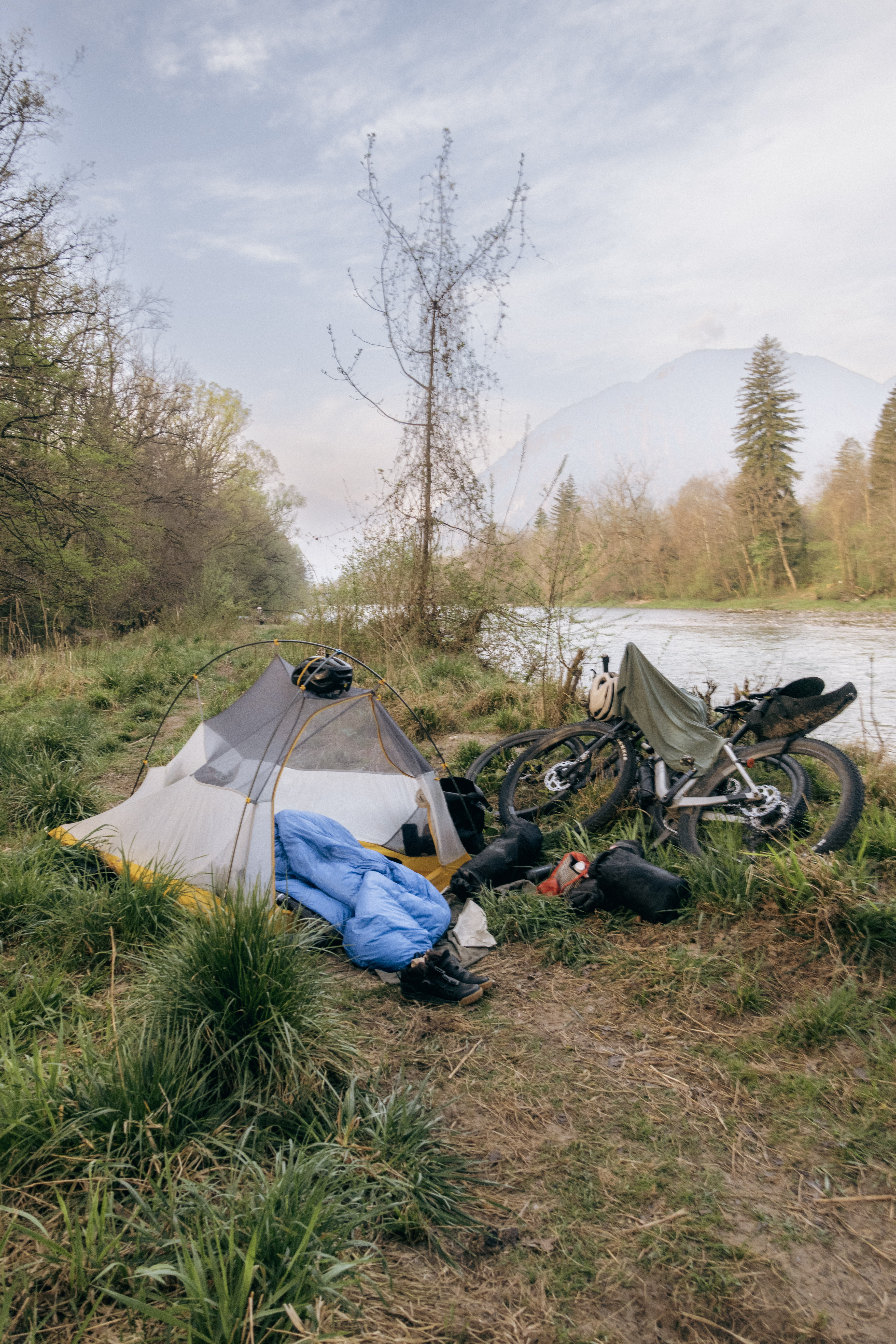
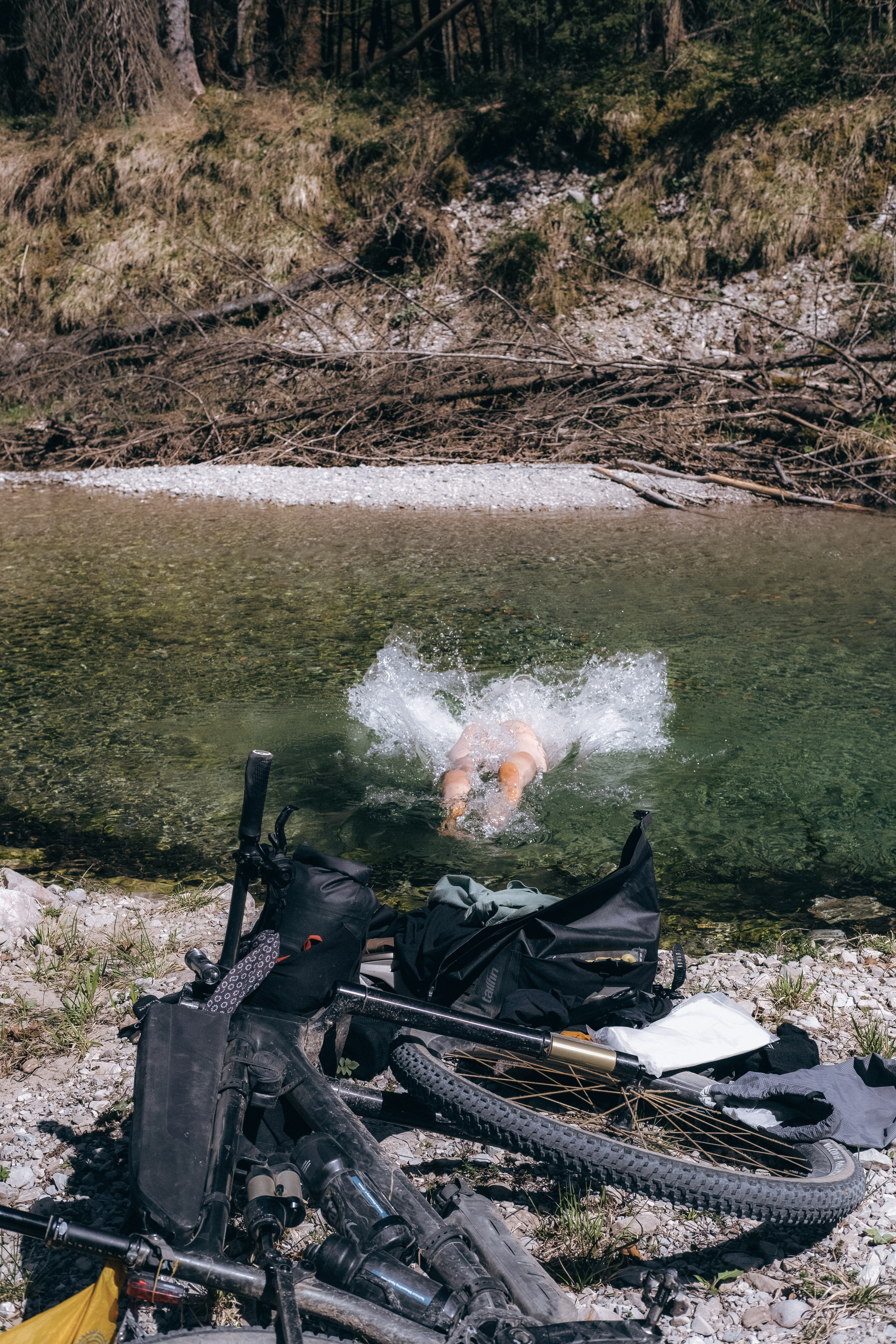
We found home on a beach by the river, with the city glowing in the back. Come morning we saddled our steeds and, finally, headed into the Alpine. In less than 5 hours we had decided, boarded a train, pedalled through one of Austria’s largest cities and set up camp at the foot of the mountains.
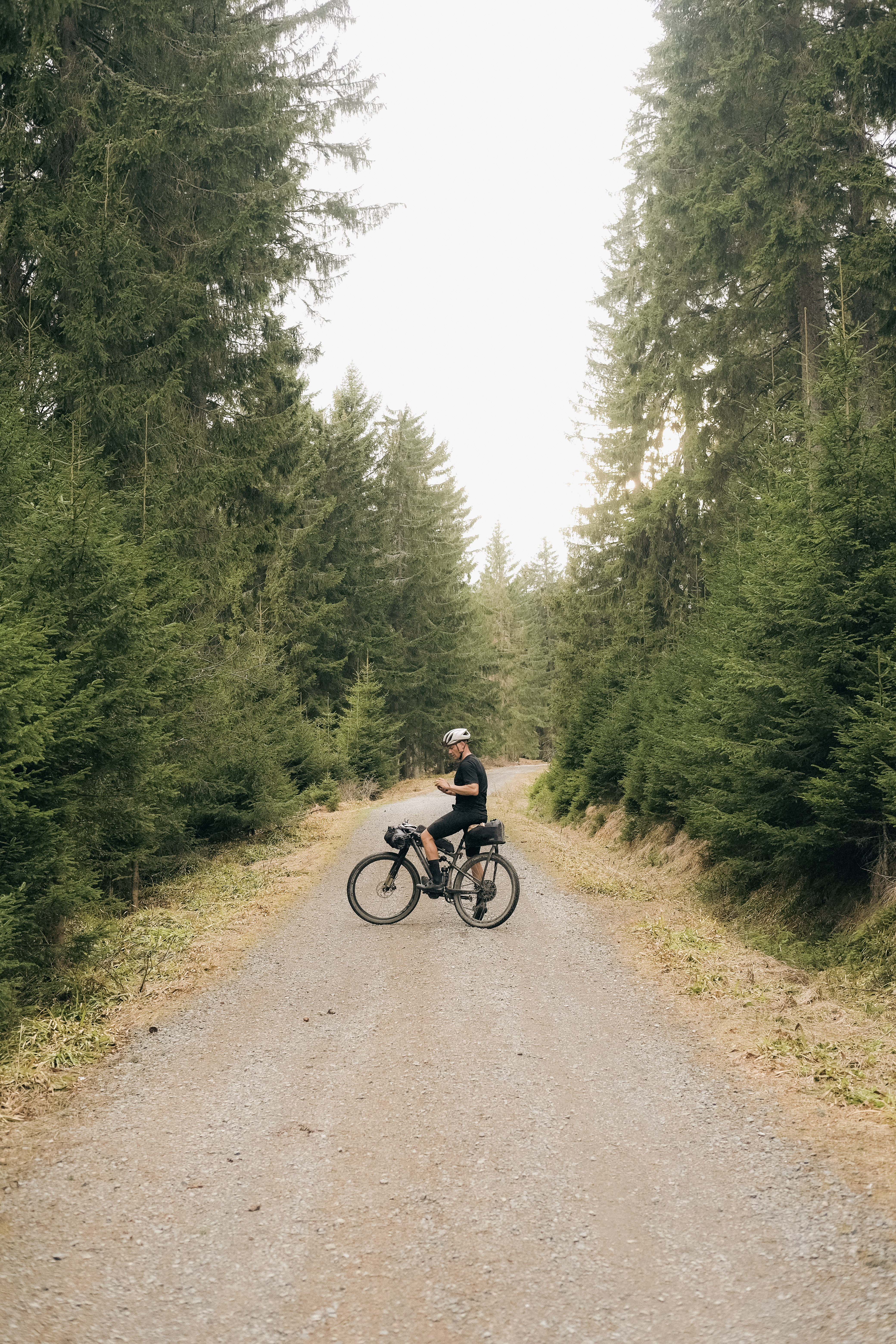
Exploring unfamiliar terrain in the deep forests of Šumava had been exciting, and at times isolating, but in truth we were made for the mountains. Both of us thrive in the high alpine. And so we were content with our spontaneous return—the timing felt right.
Ois hod sei Zeit (all in good time)
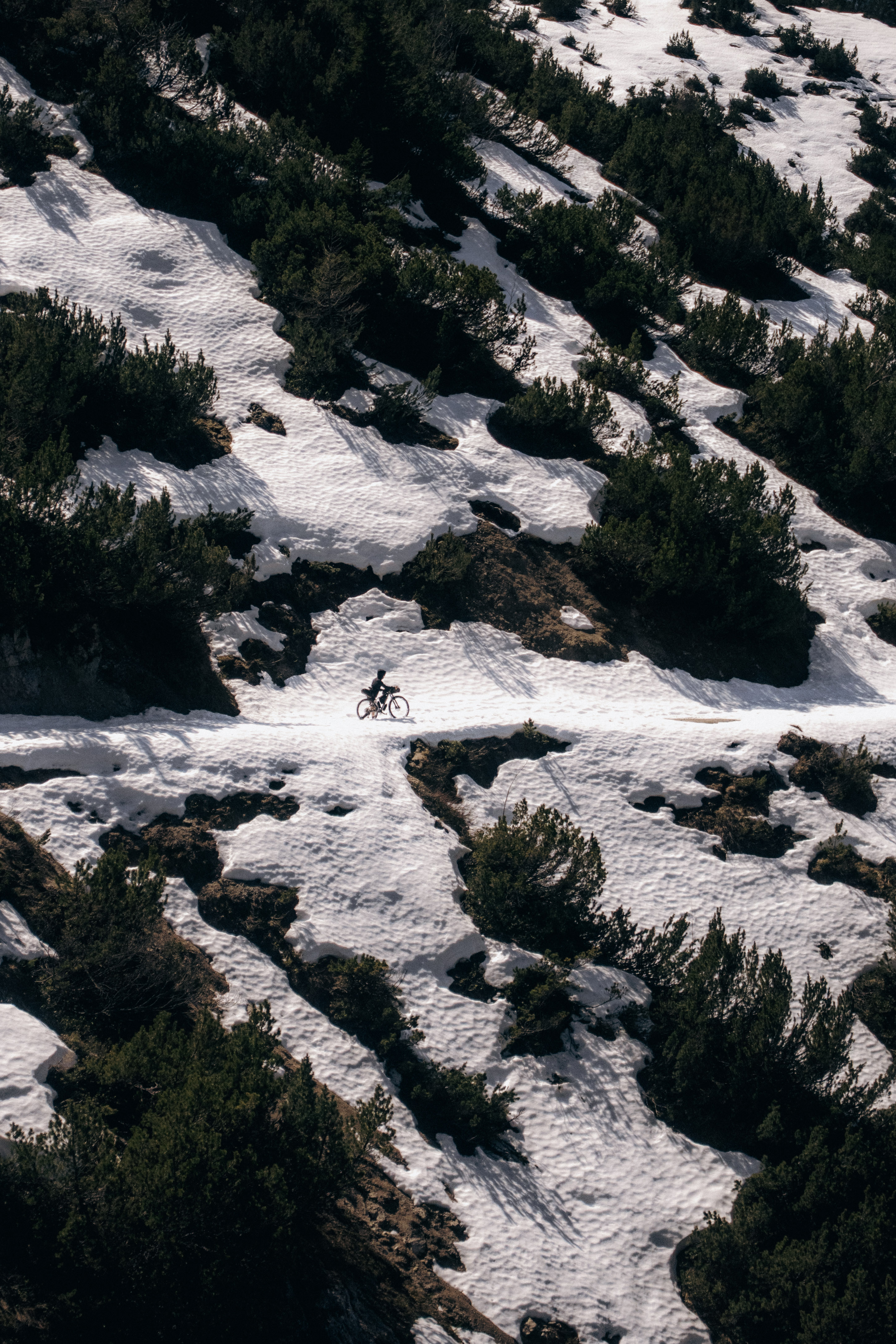
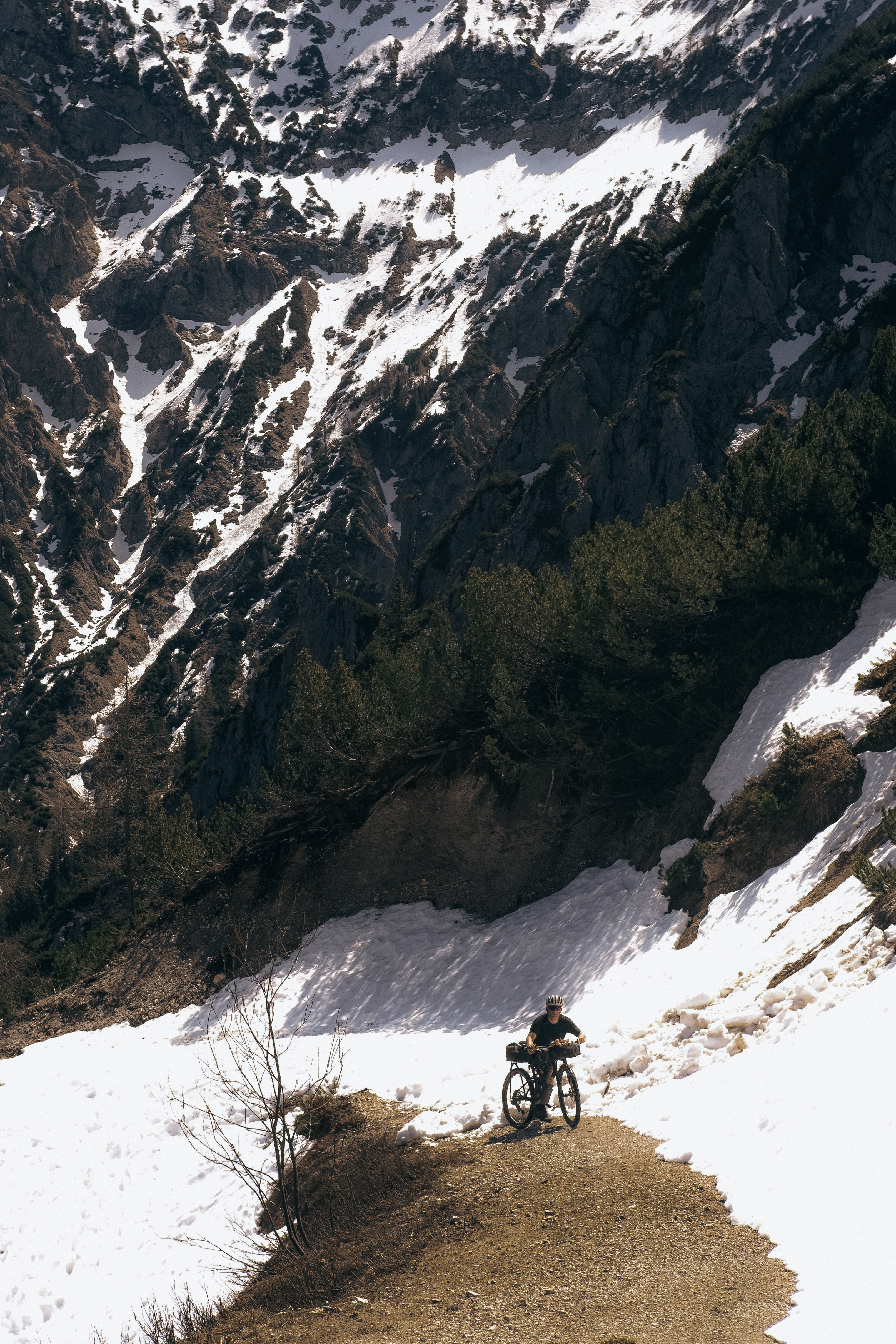
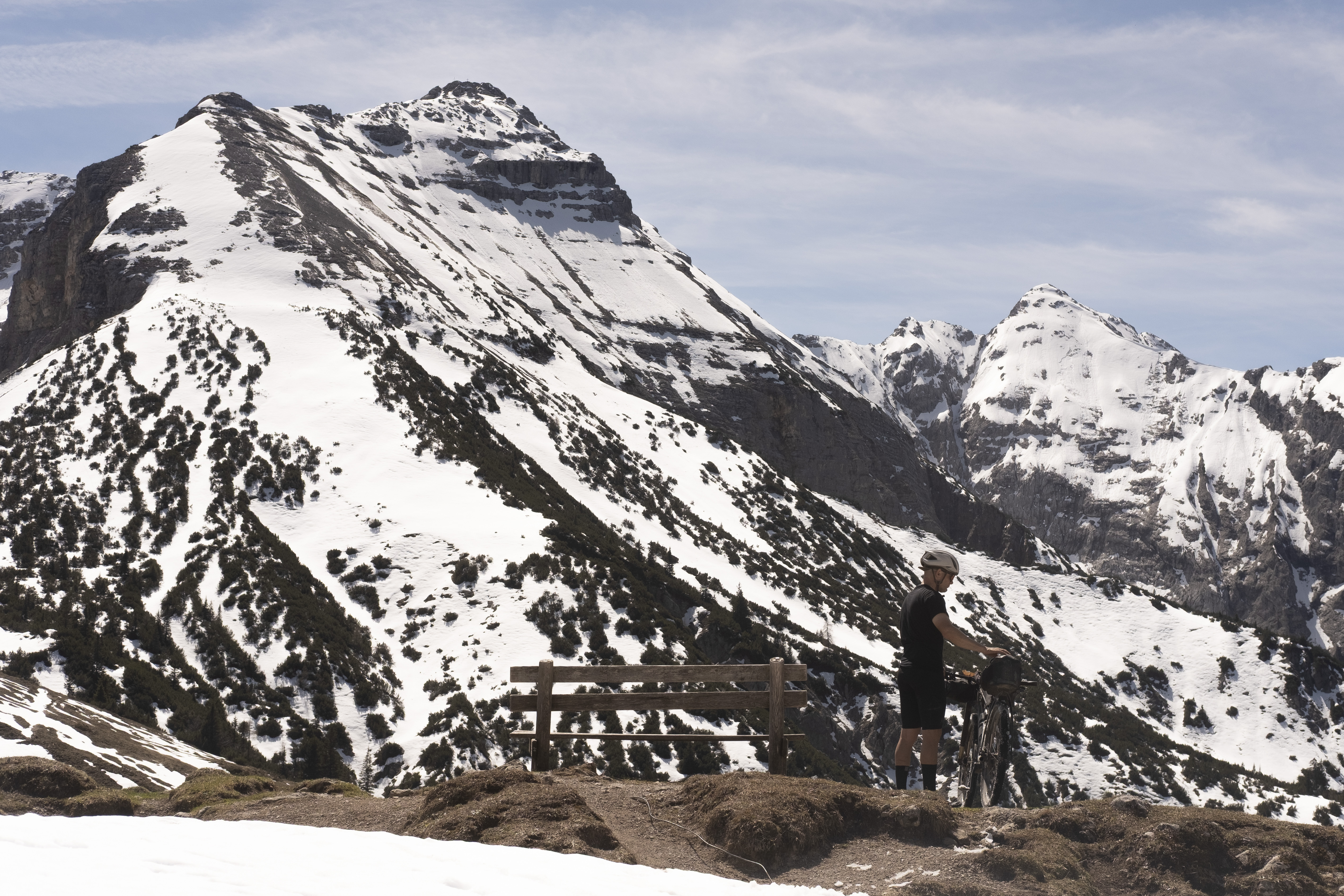
That we camped by the foot of the mountains was no exaggeration. As soon as we set off, the climbing began—and it never really stopped. The Karwendel doesn’t ease you in. It throws you right into the steepest of steeps, especially once you leave Achensee behind. Plumsjoch at its best. Switchbacks, forest roads, snow patches in the shade. It’s raw, close and beautiful.
There’s something about being in the mountains that slows things down. Maybe it’s the gradient. Maybe the fact that you have time. Maybe the reminder that you’re small and everything else is not. Time expands, thoughts stretch out, and there’s space for everything else.
And that’s probably what we were looking for in the end: a reminder that everything comes in its time. Not every ride needs a planned route, a peak, a finish line or a caption. Not every plan needs to succeed. Some stories unfold slowly. Less linear. Less loud.
Few bikepacking destinations offer as much flexibility, or as many shifts in borders, languages, landscapes and cultures, as Central Europe. It’s a region where traditions intertwine and where every junction offers a new perspective. The compactness of these countries and the efficient public transport network make it easy to follow the weather, chase curiosity or change course on a whim.
We’re grateful to have such an extensive rail network at our doorstep. It gives us the freedom to improvise. To chase the sun. To escape storms. And to find our way, even when we’re not quite sure where that is.